
Aggressive Dog Training: Why Dogs Become Reactive and What Owners Can Do
Dog aggression and leash reactivity can make something as simple as a neighborhood walk stressful. Before you can change the behavior, you need to understand why it’s happening and what your dog may be learning from each encounter.
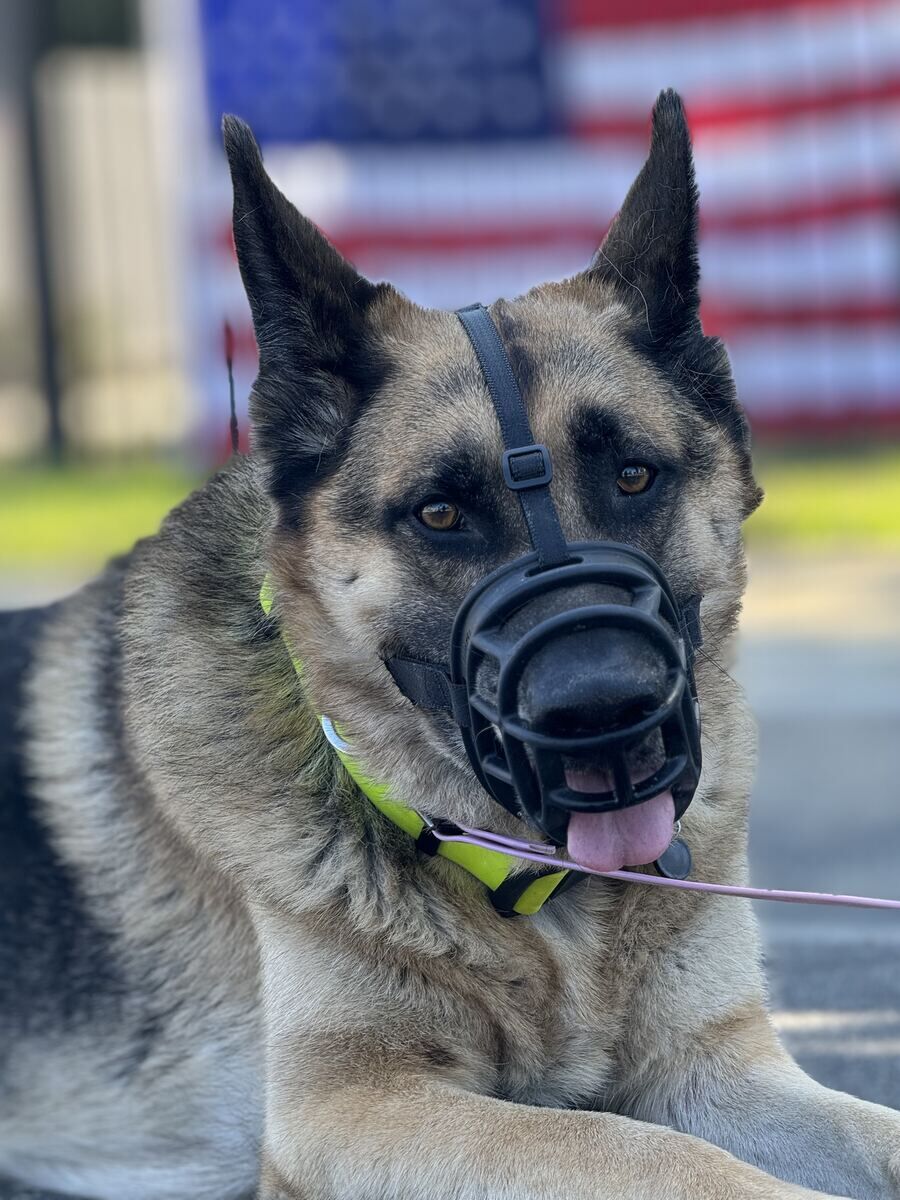
Your dog sees another dog across the street.
Their body changes. They stare, become tense, pull forward—and suddenly they’re barking and lunging at the end of the leash.
You tighten the leash, cross the street, and try to get out of the situation.
Sound familiar?
Dog aggression and leash reactivity can make something as simple as a neighborhood walk stressful. But before you can change the behavior, you need to understand why it’s happening and what your dog may be learning from each encounter.
At Empire K9, we work with owners dealing with reactive and aggressive dogs throughout Rancho Cucamonga, Upland, Claremont, Rialto, Fontana, Pomona, Ontario, Chino, Chino Hills, and surrounding Inland Empire communities.
This article explains some of the patterns we commonly see and why establishing obedience and owner handling skills is an important part of behavior modification.
Why Is My Dog Aggressive?
“Aggressive” describes behavior. It doesn’t necessarily explain what is causing it.
Dogs can display aggressive behavior for different reasons, including fear or insecurity, territorial behavior, resource guarding, frustration, poor socialization, previous experiences, genetics, or combinations of multiple factors.
In many cases, aggressive behavior can function as a defense mechanism.
The dog has learned that barking, growling, lunging, or otherwise behaving aggressively can create distance from something it perceives as threatening or uncomfortable.
Understanding that distinction matters because simply trying to stop the visible behavior doesn’t necessarily address the entire problem.
When Flight Isn’t an Option, Some Dogs Choose Fight
Dogs can respond to uncomfortable situations in different ways—fight, flight, avoidance, or acceptance.
But think about what happens when we attach a leash.
We control where the dog can go.
A dog that might normally create distance from something uncomfortable may no longer have that option. If the dog repeatedly feels unable to escape, it may begin using a stronger strategy to create space.
That can look like barking, growling, lunging, snapping, or explosive behavior at the end of the leash.
This doesn’t mean every reactive dog is fearful or that every case develops the same way. It means we need to understand the individual dog and the function of the behavior before deciding how to address it.
How Owners Can Accidentally Reinforce Leash Reactivity
Imagine you’re walking through your neighborhood and another dog approaches.
Your dog becomes tense.
You become nervous and tighten the leash.
Your dog begins barking and lunging.
You cross the street to get away.
The other dog disappears and the pressure is relieved.
From your perspective, you prevented a confrontation.
But your dog may have learned something different:
If that sequence happens repeatedly, the behavior can become stronger because, from the dog’s perspective, reacting worked.
This is one reason owners shouldn’t wait until the dog is already exploding at the end of the leash before thinking about training.
Build the Walk Before You Challenge the Reactivity
Before working directly around another dog, the owner needs to know how to properly walk and handle their own dog.
That’s where we start.
Depending on the individual dog, equipment and handling may also need to change. A trainer may recommend different properly fitted training equipment based on the dog’s behavior, size, handling needs, and training plan.
Equipment alone does not train the dog.
The important part is teaching both ends of the leash.
We can begin in a controlled environment such as the home or yard where the owner learns proper handling and the dog learns what is expected without being overwhelmed by its biggest triggers.
Layer the Distractions
Once the dog understands how to walk properly, we don’t immediately throw it into the hardest possible environment.
We gradually increase the difficulty.
For example, we may teach the dog to walk past food without breaking position or pulling toward it.
Once that becomes easy, we introduce favorite toys.
Then we make those toys more animated and exciting.
Then we can increase the difficulty again with higher-value food and other controlled distractions.
Every layer asks the dog the same basic question:
Can you remain focused on your handler even though something you really want is happening around you?
As the dog’s impulse control improves and the owner’s handling becomes more confident, we’re building skills that can eventually be applied around the dog’s actual triggers.
Obedience Gives Us Something to Rely On
This is why obedience plays such a large role in Empire K9’s behavior modification programs.
Before expecting a reactive dog to make good decisions around another dog, person, or environmental trigger, we want communication between the dog and owner.
The dog needs to understand what the owner is asking, and the owner needs the handling skills and confidence to follow through.
Depending on the individual dog, training may include foundational obedience, loose-leash walking, Place, Sit, Down, Recall, impulse control, and confidence-building exercises.
For fearful or insecure dogs, obstacles and other confidence exercises can also help the dog learn to work through uncertainty while developing greater trust in the handler.
When Do We Start Working Around Other Dogs?
When the foundation is ready.
For dog-reactive cases, Empire K9 may work outside a dog park rather than inside one.
Why?
Because distance gives us control.
We can begin far enough away that the dog and handler are capable of working together. As they improve, we gradually decrease that distance and increase the difficulty.
Eventually, the goal is for the owner to have enough control that the dog can appropriately pass other dogs coming and going without an unnecessary explosion.
We’re not interested in forcing a reactive dog into uncontrolled interaction simply to see what happens.
Training should progress according to what the individual dog is ready to handle.
Your Dog Doesn’t Have to Love Every Dog
This is an important expectation for owners.
The goal of behavior modification isn’t necessarily to turn an aggressive or reactive dog into a social butterfly.
Coexistence can be a successful outcome.
We want the dog to become capable of remaining under control and passing people and other dogs appropriately.
With progress, some dogs may eventually work successfully in busier environments around people and dogs while remaining under the owner’s control.
Severe cases may still require responsible management, including a properly fitted muzzle when appropriate.
Aggression at Home Can Look Different
Not every aggression problem happens on a walk.
Dogs may also display territorial or aggressive behavior when someone enters the home, behind fences, around vehicles, or around valued resources.
Some dogs become highly territorial when guests arrive. Others fence-fight or become frustrated behind physical barriers. Some display resource guarding around food, toys, or other valued items.
These cases should not automatically be treated as identical problems simply because aggression is involved.
The first step is understanding what is actually happening with the individual dog.
Why an Evaluation Matters
When evaluating an aggressive or reactive dog, we aren’t just looking at whether the dog barked.
We look at the whole picture.
That includes the dog’s eyes, body posture, stiffness, tail, environmental triggers, reactions, previous incidents, owner handling, and what happens before and after the behavior.
We also look at what the owner may unknowingly be doing that contributes to or reinforces the problem.
That’s not about blaming the owner.
Most owners simply haven’t been shown how to properly work with the dog in front of them.
A good evaluation should give the owner a clearer understanding of what may be driving the behavior, what needs to change, and what realistic goals look like.
Don’t Wait for the First—or Next—Bite
One of the biggest mistakes we see is owners waiting too long to seek help.
The warning signs may have been present when the dog was younger, but training doesn’t begin until the behavior has escalated—or sometimes until multiple bites have already occurred.
If you’re seeing fixation, increasing reactivity, growling, lunging, territorial behavior, resource guarding, or other concerning aggression, don’t wait for the behavior to become more serious before seeking professional help.
The earlier you understand what you’re dealing with, the sooner you can begin establishing better communication, handling, obedience, and management.
Can an Aggressive Dog Be Trained?
There isn’t one answer that applies to every dog.
Severity, behavioral history, genetics, environment, previous reinforcement, owner consistency, and many other factors can influence progress.
That’s why Empire K9 doesn’t start by promising a particular result without seeing the dog.
If you’re wondering:
“Is my dog too aggressive to train?”
Our answer is:
Let’s evaluate the dog first.
Empire K9 offers private behavior modification and aggressive dog training throughout the Inland Empire, including Rancho Cucamonga, Upland, Claremont, Rialto, Fontana, Pomona, Ontario, Chino, and Chino Hills.
A Clear Way to Start
Choose the program around your dog's needs and the outcome you want. Owners participate in coaching and practice between visits so the training carries into daily life.
$800 · 5 private in-home sessions
Puppy Foundations
For puppies approximately 8 weeks through 6 months old. Build the habits, communication, and household manners you want from the start.
$1,500 · 8–10 private sessions based on needs
Complete In-Home Training
A customized private training program designed around your dog's needs, covering obedience, manners, real-world reliability, and appropriate behavior problems.
$3,500 · approximately 4 weeks · pickup & drop-off included
30-Day Complete Board & Train
Approximately four weeks of professional training with pickup and drop-off included, real-world proofing, and owner transition coaching.
Puppy Foundations starts with a free phone consultation — no paid evaluation upfront. For in-home and Board & Train programs, the $99 evaluation is a separate paid service and is not credited toward a package. A $275standalone training session is also available for a focused goal when a full program is not the right fit.
Related Training Services
Keep Reading
Dog Behavior Modification: Building Control Before Confronting the Problem
Behavior modification isn’t simply about stopping a reaction. How Empire K9’s training process works: evaluation first, obedience and owner handling, confidence building, and controlled exposure in layers.
Is In-Home Dog Training Right for You?
If your dog lives inside your home, that’s usually where training should begin. Learn how functional obedience can help with jumping, barking, leash pulling, reactivity and poor manners.
Private Dog Training vs. Board and Train: Which Is Better for You and Your Dog?
Board and train or private dog training? An experienced dog trainer explains the real differences, pros and cons, owner involvement, and which option may be right for your dog.
How to Prevent Resource Guarding in Your Puppy: Stop Creating Unnecessary Conflict
Some of the things people do to prevent resource guarding can actually contribute to creating it. Manage first. Train second. And don’t create a fight with your puppy that never needed to exist.
Want Hands-On Help?
Request a free 15 minutes phone consultation first, and the owner calls you first. If an in-home evaluation is the right next step, we send a private link for you to choose a time and pay $99 online. The 45–60 minutes in-home evaluation fee is separate and is not credited toward a training package.